
Statesboro Directory Collections by Year
The known online city directory run is small but precise. The Digital Library of Georgia lists exactly three R.L. Polk editions, not a continuous span. The first volume describes Polk as beginning its Statesboro directory and includes Collegeboro plus rural routes from the Statesboro post office. Local repositories then broaden the search with newspapers, topic files, manuscripts, yearbooks, and maps.
| Collection | Years | Where held | Access |
|---|---|---|---|
| R.L. Polk Statesboro city directories | 1959, 1962, 1964 | Digital Library of Georgia / regional library | Free digitized text and page images |
| Local newspapers | 1899 forward span reported | Statesboro-Bulloch County Library | Microfilm in the library; ask about databases |
| Public History Files | Mixed local dates | Library cabinet / Georgia Southern Commons | Master index and more than 1,000 items |
| Bulloch manuscripts | Collection-specific | Georgia Southern Henderson Special Collections | Finding aids and staff-retrieved materials |
| Statesboro Sanborn maps | 1908, 1913, 1922, 1930, 1946 | Library of Congress | Free digital maps |
No official online inventory states all undigitized directory or telephone-book years, nor the last printed year. Call the library before travel when a missing edition is essential.
Three Statesboro Polk Directories
The Digital Library of Georgia collection provides the 1959, 1962, and 1964 editions. Search OCR text for a surname, then inspect the scanned page because old type, initials, and abbreviations can defeat text recognition. The alphabetical list and Street and Avenue Guide answer different questions.
The directory covers more than a bare city list. The 1959 edition includes Collegeboro and rural routes emanating from the Statesboro post office, a useful warning that “Statesboro” could describe postal reach as well as the city core. Record the printed address exactly before translating it to a modern map.
A missing hit does not prove absence. Try initials, a spouse's name, maiden and married surnames, variant spellings, and the street section. Georgia Southern students may be more visible in yearbooks or campus publications than in household listings.
Decode a Statesboro Directory Entry
A city directory entry compresses a life into symbols. Read the edition's key before assuming what a letter means. A head-of-household name may be followed by a spouse in parentheses, a trade or employer, and a residential address. “Wid” identifies a widow in relation to a deceased spouse, while other short marks can distinguish a residence, boarding place, or ownership status.
| Name | Surname, given name or initials; business entries may be separate |
|---|---|
| Spouse | Name in parentheses when the publisher supplied it |
| Work | Occupation and sometimes employer or business address |
| Residence | House number, street, route, or other period address |
| Status marks | Edition-specific signs for widowhood, boarding, or ownership |
- Criss-cross directory
- A section arranged by street and number, allowing an address-to-name search.
- Householder index
- A list centered on named household heads rather than every person present.
- Abbreviation key
- The publisher's legend defining short forms and symbols for that edition.
Photograph or save the title page and key with the entry. Those pages preserve the publisher, edition date, and meaning of each mark.
Reverse Statesboro Streets to Names
The Street and Avenue Guide works in reverse. Choose the street, scan house numbers in order, note crossing streets, and copy each household or business on the segment. Repeating that work in 1959, 1962, and 1964 can reveal a move, a new business, a renumbered-looking entry, or a change in who was listed.
For present-day ownership and parcel geometry, shift to the Statesboro street directory workflow. Historical entries identify people or firms published at that address in that year. They do not establish current occupancy, and a street name alone can be risky when rural routes or postal areas have changed.
Statesboro's Thousand-File History Cabinet
The Public History Files catch local material that may never appear under a person's name in a library catalog. More than 1,000 topical files cover streets, schools, churches, subdivisions, organizations, businesses, and families. A physical cabinet sits in the hallway left of the library Genealogy office, and a master index points to digitized material.
The Statesboro-Bulloch Public History Files expose that index online.
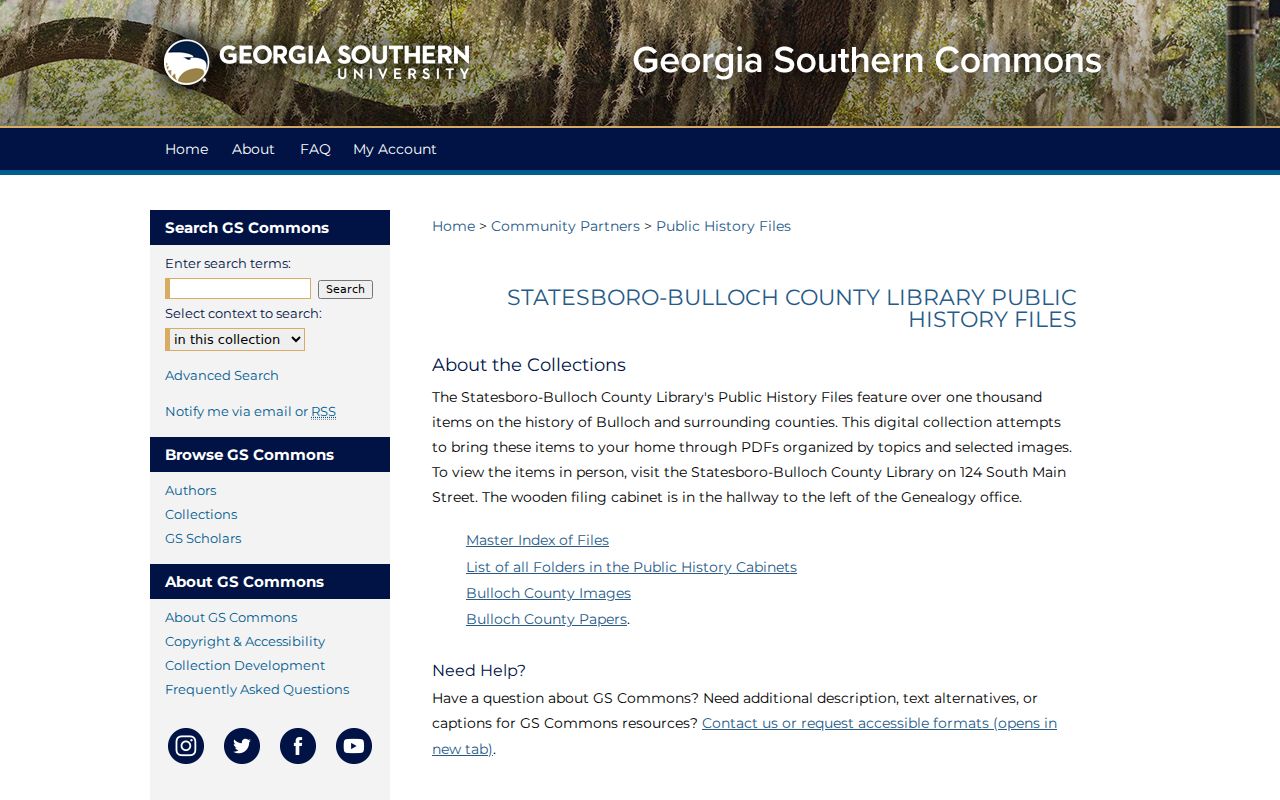
Search a surname, then repeat with a street, church, school, subdivision, and family business. This topic-first method often finds a resident indirectly through a club roster, clipping, photograph caption, or neighborhood file.
Statesboro Library Genealogy Shelf
The Statesboro-Bulloch County Library at 124 S. Main Street is the chief local fallback when a digitized city directory leaves a gap. Resource descriptions report about 8,000 genealogy books and periodicals, along with family, county, and church histories. Its microfilm holds local newspapers back to 1899, plus census, military, court, marriage, land, and cemetery material.
The Bulloch County Historical Society resource guide routes researchers to the library, Georgia Southern, and other repositories.
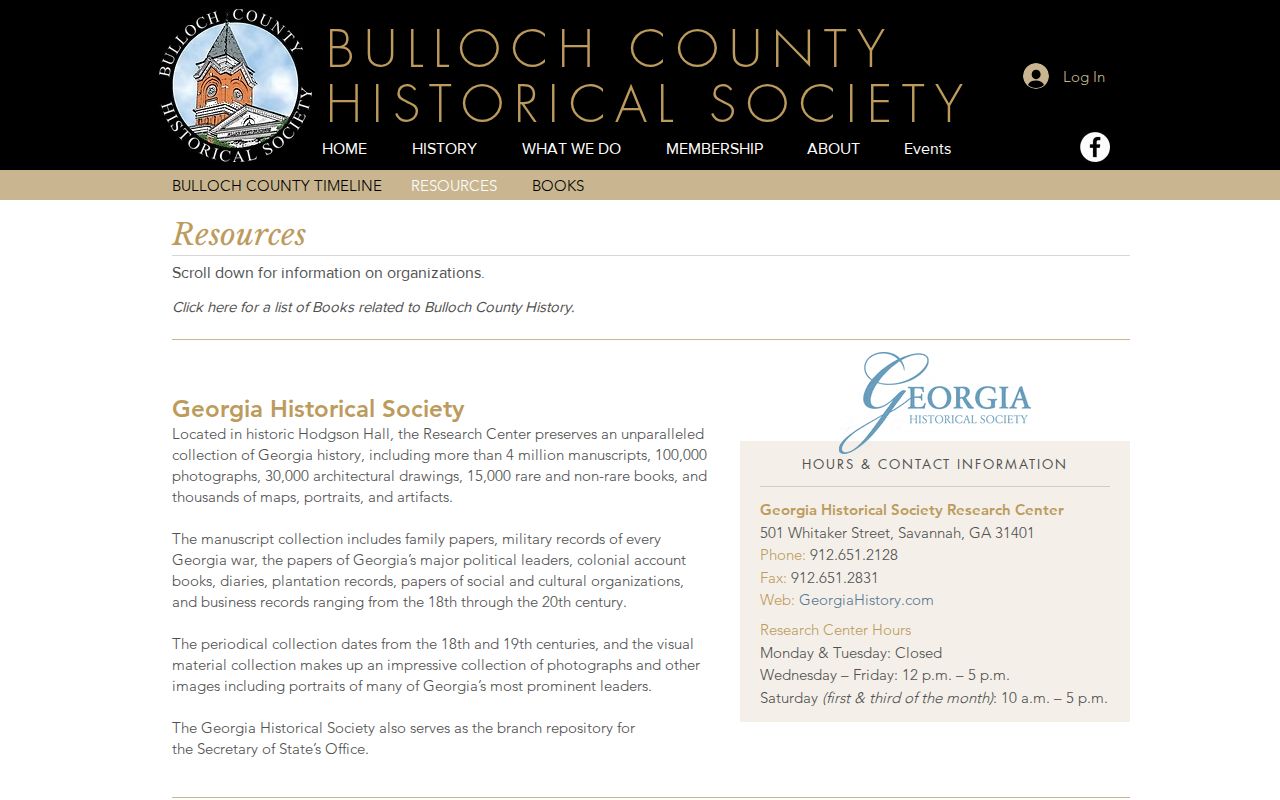
Call 912-764-1340 or 912-764-1341 to ask which editions, telephone books, readers, databases, and staff help are available. Describe the person, address, and date range rather than asking for every item under a broad surname.
Statesboro Names at Georgia Southern
Henderson Special Collections preserves Bulloch Historical Society manuscripts, photographs, business ledgers, account books, organization files, and “Rambling through Bulloch County” newsletters. Its finding aids identify about 500 collections and roughly 6,000 bound volumes across campuses. Materials are staff-retrieved, so begin with the catalog and request an appointment at specolle@georgiasouthern.edu.
The Georgia Southern special-collections profile describes the scale and current work.
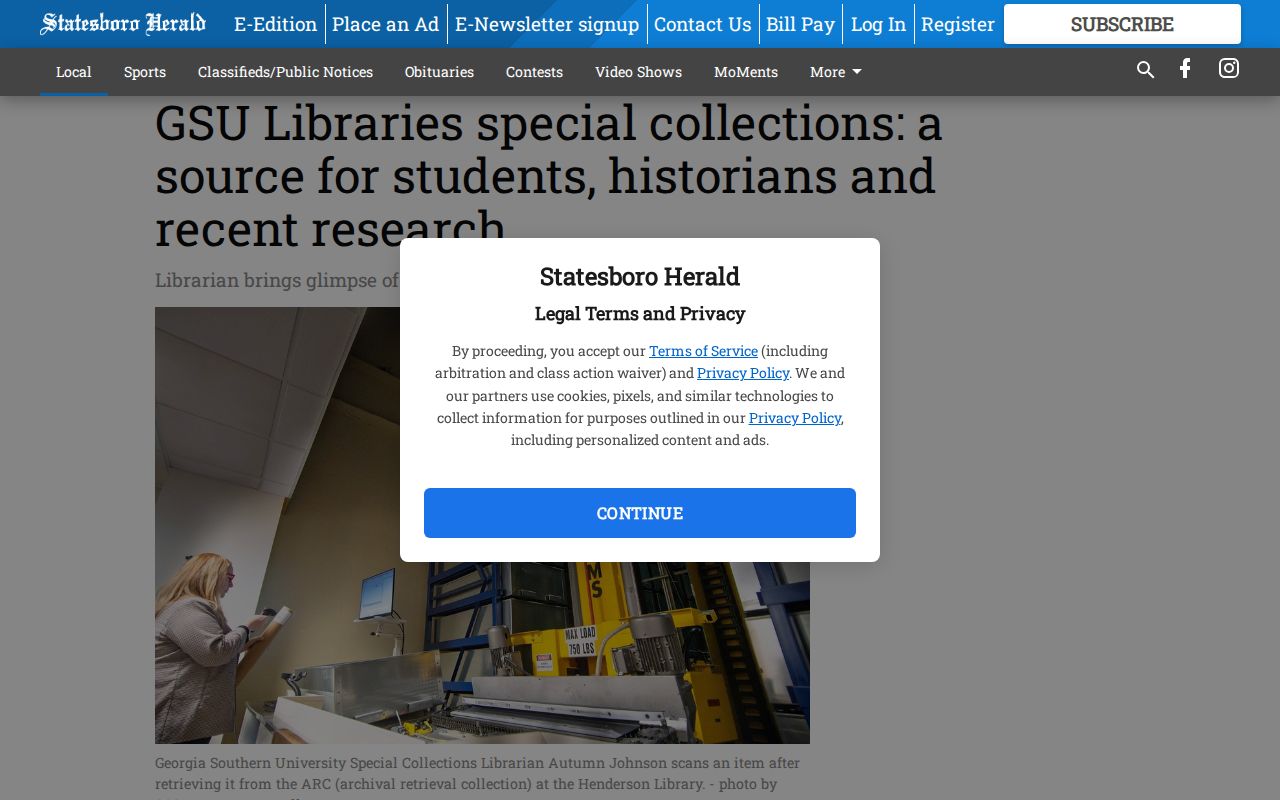
Named collections can reach people omitted from a city directory. Unit 90 American Legion Auxiliary material includes a list of Bulloch World War I veterans, while local DAR records span decades with a documented gap. Yearbooks and alumni publications can help with campus residents and staff.
Map Historic Statesboro Addresses
Sanborn fire-insurance sheets add building footprints, use, height, construction material, and street-number context. Statesboro editions exist for 1908, 1913, 1922, 1930, and 1946. The old Main Street core, South Main bungalow grid, and Savannah Avenue's early suburban homes are especially suited to pairing maps with later Polk street guides.
The Library of Congress Sanborn guide explains how to read map keys and locate editions.
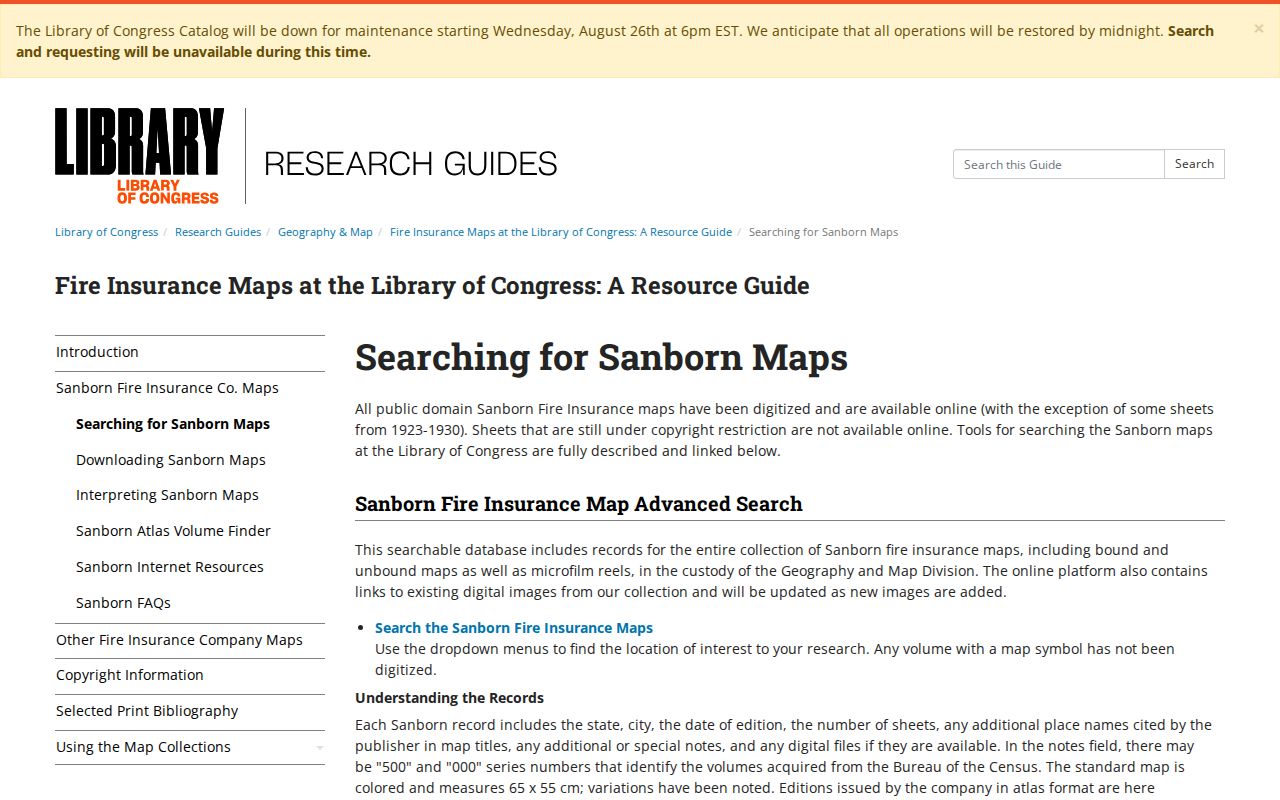
After the map fixes a structure in place, search newspaper microfilm for an obituary, marriage, property transfer, school item, or community column. A building can persist while occupants and businesses change.
Statesboro Record Timeline
Directory research sits within a longer local record history. Early courthouse books use names, districts, and land descriptions because they predate modern numbered streets. These benchmarks help choose the next source when a city directory year is unavailable.
| Date | Statesboro and Bulloch record milestone |
|---|---|
| 1796 | Bulloch County was created. |
| 1803 | Statesboro became county seat and was chartered. |
| 1864 | The courthouse burned; surviving books and archive cards still require checking. |
| 1899 | The reported local newspaper microfilm span begins. |
| 1959 | Polk began its Statesboro directory run represented online. |
| 1962 and 1964 | The other two digitized Polk editions appeared. |
The 1864 fire is not proof that every older record vanished. Check clerk books, microfilm, Georgia Archives county cards, and related manuscripts before ending the search.
Trace Families in Statesboro Directories
Use each city directory as a dated checkpoint, then connect it to a record created for a different purpose. The 1950 federal census is the newest public schedule as of 2026, making it the best nearby household benchmark for the digitized Polk years.
- Find the person in the alphabetical section. Save the full entry, key, title page, and edition year.
- Check spouse, surname variants, initials, and the same address in the street guide.
- Compare 1959, 1962, and 1964. Record each move, occupation change, and person newly listed at the address.
- Pair the result with the 1950 census, later newspaper notices, and local topic files.
- Use probate, obituary, cemetery, or deed records to explain a disappearance or household change.
“Not listed” has several meanings. The person may have moved, died, changed surname, lived on a rural route, attended the university, declined publication, or been missed by the canvass. Two independent sources make the identity match much stronger.
Women may appear under a maiden surname in one source and a married surname in another. Historical directory keys also explain spouse names in parentheses, widow notation, and shortened occupation labels. Copy the wording before expanding it, since an abbreviation can change meaning by edition. For a rural household, search road names, route numbers, militia districts, and land descriptions as well as a modern house number.
The library's newspaper microfilm adds events between directory years. Obituaries, marriage notices, property transfers, school columns, and community news can explain why a name arrives or disappears. A public-history folder may preserve a church, school, subdivision, or business record that was never cataloged by a resident's name. Search the folder index broadly, then compare any person found there with a dated directory entry.