
Find Statesboro Residents Step by Step
No office keeps a full list of Statesboro residents. Each public roll answers one narrow question. The tax assessor names the owner of record and separates the parcel's physical, or situs, address from the mailing address used for tax notices. The land index names parties to deeds, liens, and plats. Court dockets identify parties and case roles, and historical directories list occupants and businesses for selected years, which can support a careful residents directory search. Remember, the owner may not live there.
Start with the strongest fact you hold. A parcel number beats a loose street spelling. A case number beats a common name. Georgia Southern's student population and long-established local families make same-name matches especially risky, so keep suffixes, middle initials, dates, party roles, and the record's own identifier. Two independent matches are the practical minimum before you call it the right person.
- Search the Bulloch County qPublic roll by owner, location address, or parcel.
- Compare the situs and owner mailing addresses, then save the parcel number and deed reference.
- Follow the owner into the GSCCCA Real Estate Index, checking both grantor and grantee roles.
- Use court, business, license, probate, or vital records only when they match the search purpose and identity facts.
- For older occupants, move to the library's Polk directories, newspaper microfilm, census material, and public-history files.
Statesboro Resident Records Custodians
Statesboro is the Bulloch County seat. Key resident records sit within a few blocks of the center. The Superior Court clerk records land instruments. That office also holds Superior, State, and Juvenile court files. The Tax Assessor maintains the property roll and the parcel map. Elections and Registration manages the voter register. The state My Voter Page offers an authenticated self-check rather than a public street browse. City Hall keeps its own municipal records. Those include ordinances, licenses, and address-specific permit or code files that already exist.
The Statesboro City Clerk page identifies the office and its public-record duties.
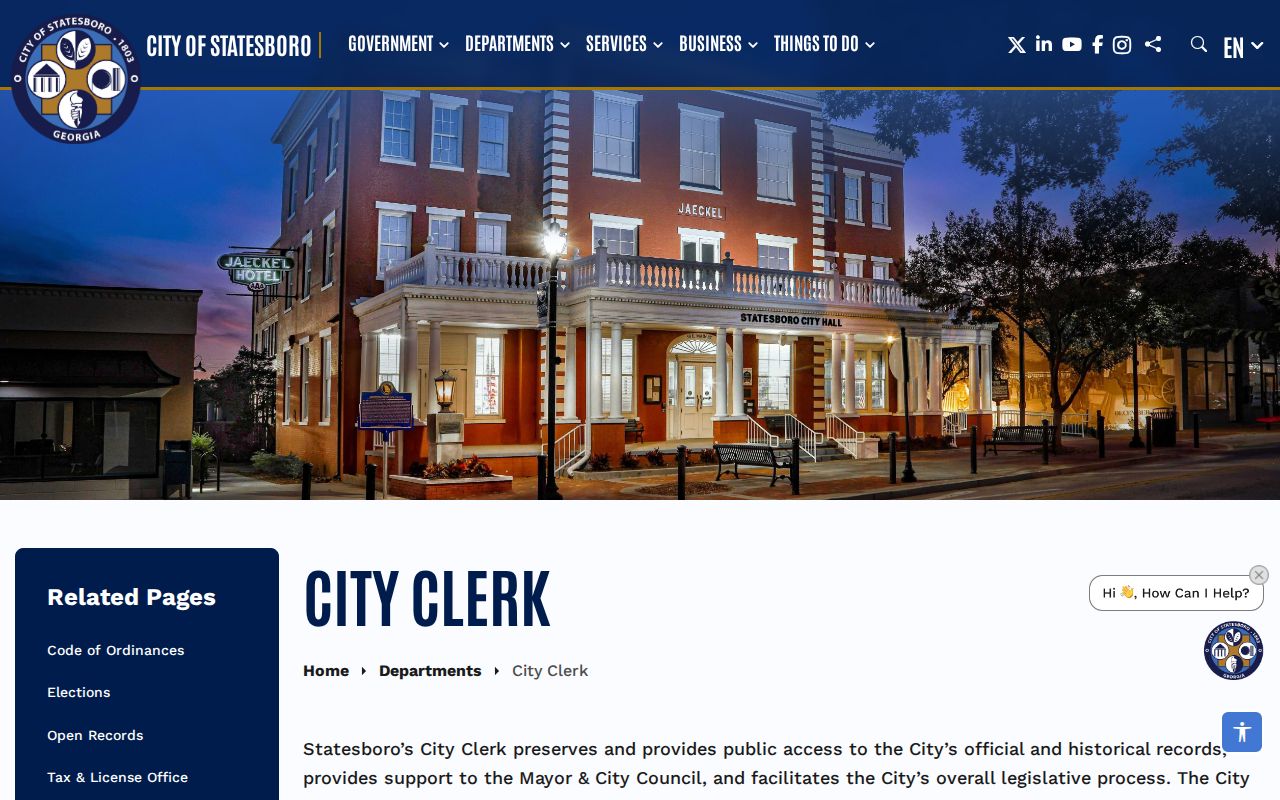
That city channel fits an existing municipal file. It is not a route for asking staff to create a new list of residents.
Read Statesboro Parcel Clues Carefully
The assessor's roll is often the fastest official name-and-address index in Statesboro. A single result can show parcel ID, class, tax district, acreage, owner, mailing address, physical address, market value, sale rows, and map context. Each field does different work. The physical address labels the land itself. The mailing address shows where tax notices go. A homestead code may point to owner occupancy, but it never lists every household member, and a different mailing address can mean an absentee owner or just a preferred mail drop.
Property inside incorporated Statesboro travels separate city and county tax routes. Compare parcel number, owner, and tax year. Two billing screens may describe the same land. The city's planning instructions point an address researcher to the county assessor first, then to “Map It” for parcel geography. A parcel ID and legal description outlast a postal label. Annexation, rural-route conversion, and E911 readdressing all change the street wording on a record.
- Situs address
- The physical address assigned to the parcel.
- Mailing address
- The destination for owner tax correspondence, which may be elsewhere.
- Parcel
- A mapped unit of land with its own identifying number.
- Legal description
- The recorded land description that survives many address changes.
Follow Statesboro Names Into Deeds
The Bulloch County Clerk of Superior Court serves as county recorder. Georgia's GSCCCA index standardizes land-record searching across all 159 counties. Search the current owner as grantee to find an acquisition. Then extend the chain through the prior owner. Trace them as both grantor and grantee. A grantor transfers an interest; a grantee receives one. A deed index result can include the parties and instrument type. It can also show a filing date and book and page or instrument number. Some entries add a legal-description reference. It establishes a role in a filing, not current residence in Statesboro.
| Search field | How it narrows a Bulloch record |
|---|---|
| County | Select Bulloch before searching a common name. |
| Name and party type | Check grantor, grantee, or both, including initials and suffixes. |
| Instrument type | Limit results to deeds, security deeds, liens, cancellations, or plats. |
| Book/page or instrument | Open a known recording directly. |
| Date range | Separates people with similar names and follows a transaction period. |
The statewide system's guaranteed real-estate floor is January 1, 1999. Older Bulloch material may be uneven before it. Free terminals at the clerk's office reach the statewide database. Remote accounts and document images can carry charges. Ask the clerk about the actual Bulloch cutoff. Use bound grantor-grantee books when the online trail stops.
The official Georgia real-estate search shows where the modern index begins.
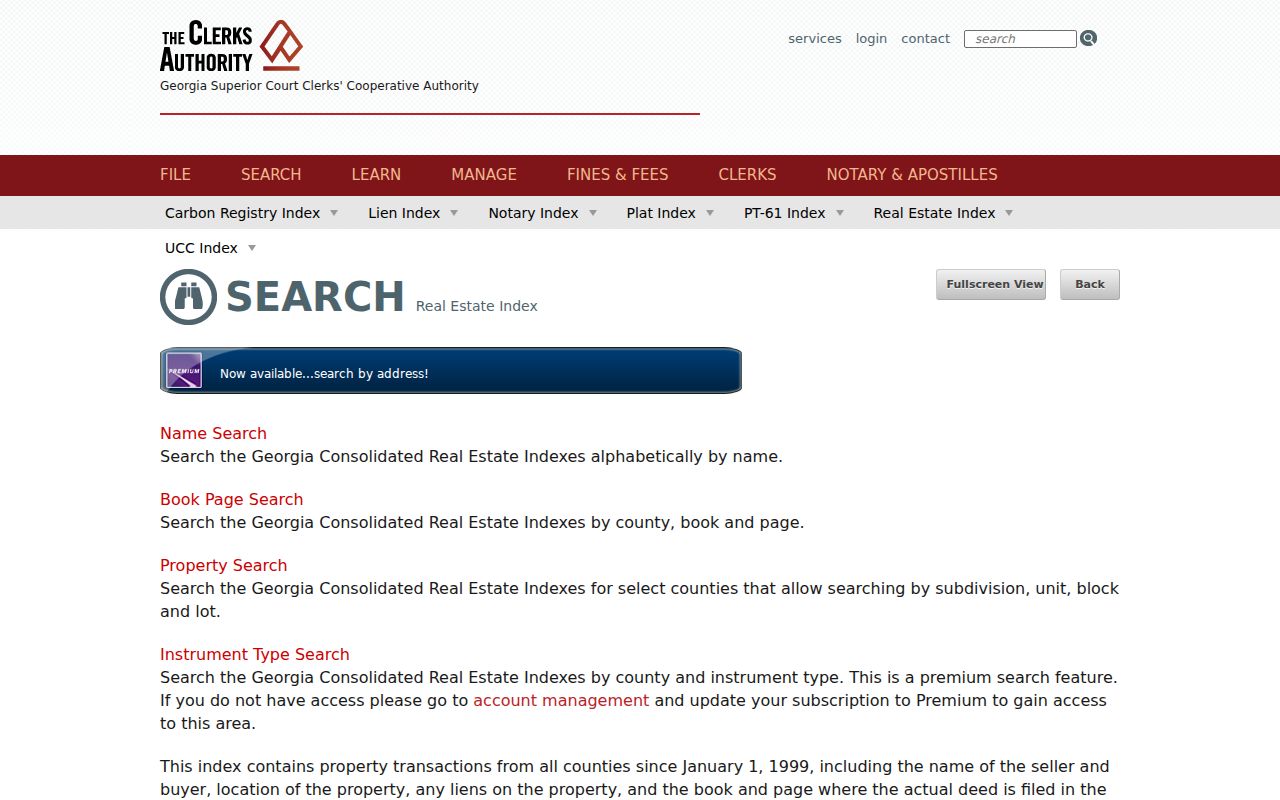
County, party, and instrument filters tame any broad name into a traceable recorded transaction.
Current Statesboro Directory Sources
Treat a current Statesboro residents directory as a set of official indexes, each with clear limits. The property roll covers titled owners. The deed index covers parties to recorded land filings. A court docket covers parties within a case. Business and license indexes cover public professional roles. My Voter Page lets a voter review their own registration, districts, polling place, ballot or absentee status, and participation history. It reveals no ballot choices and works nothing like a public block directory.
| Official source | Person connection | Best use | Limit |
|---|---|---|---|
| Bulloch qPublic | Owner of record | Name, address, parcel | Owner is not necessarily occupant |
| GSCCCA index | Grantor, grantee, lien party | Land transaction trail | Filing role is not residence |
| My Voter Page | Authenticated voter | Own registration and districts | No public street browse |
| Court e-access | Named case party | Case chronology and status | Coverage varies; sealed files excluded |
| SOS business/license | Public business or licensed role | Identity cross-check | Work address may not be home |
Match two sources before trusting anything. The Statesboro resident lookup workflow shows how to avoid treating a loose name-and-city hit as proof.
Verify Statesboro Court Matches
Felonies, general civil suits, divorces, and land disputes all land in Bulloch Superior Court. Other dockets sit elsewhere. State, Magistrate, Probate, Juvenile, and Statesboro Municipal courts each keep their own records. The Georgia court e-access directory routes Bulloch State and Superior searches to a participating provider, yet the clerk of the court that filed the case stays authoritative for the file itself, a certified copy, archived material, or anything missing online.
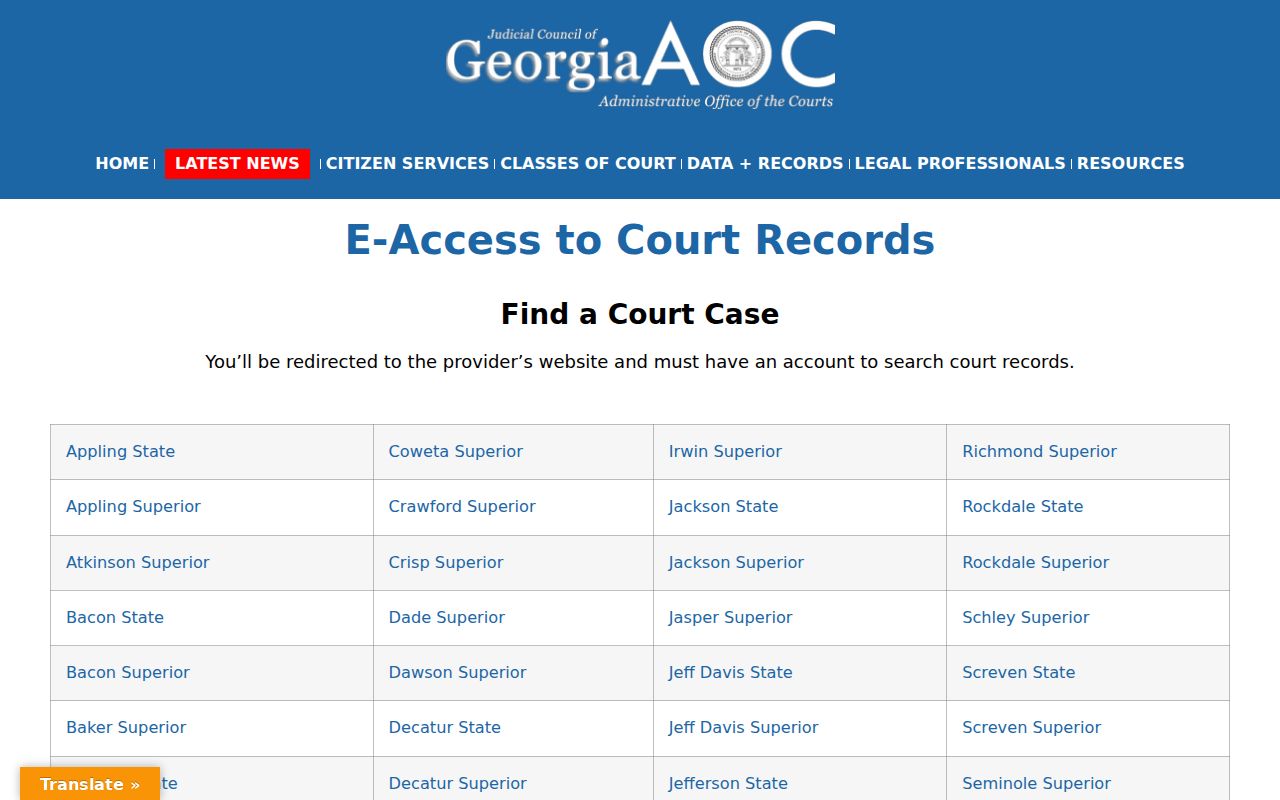
Picking the right court is where the directory helps. It will not merge every Statesboro case into one dependable person profile. Write down the court, case number, party role, filing date, and disposition. Roles matter. Plaintiff, defendant, petitioner, respondent, executor, and attorney are not interchangeable labels. A docket is only an index to the case. A filed allegation is not a finding. Juvenile, adoption, sealed, and restricted material remains off limits. Municipal traffic and ordinance matters lack a verified public party search. Check with Municipal Court at 22 W. Grady Street.
Request Statesboro Records Precisely
Georgia's Open Records Act, O.C.G.A. §§50-18-70 through 50-18-77, generally gives an agency three business days to respond. That response can hand over the record, cite an exemption, or say when production and a cost estimate will arrive. Agencies have no duty to build a custom residents directory or compile facts no existing record holds. So be specific. Name an identifiable file, custodian, date span, address, name, permit number, or case number.
Statesboro counts a city request as filed only after service on its designated officer by an approved route. Hand delivery, certified mail, statutory overnight delivery, email to openrecordsofficer@statesboroga.gov, fax, and the city's web form all qualify. The Statesboro open-record request form asks for requester details, a description of the records, and delivery preferences. Fill it out cleanly. A precise request saves everyone a round trip.
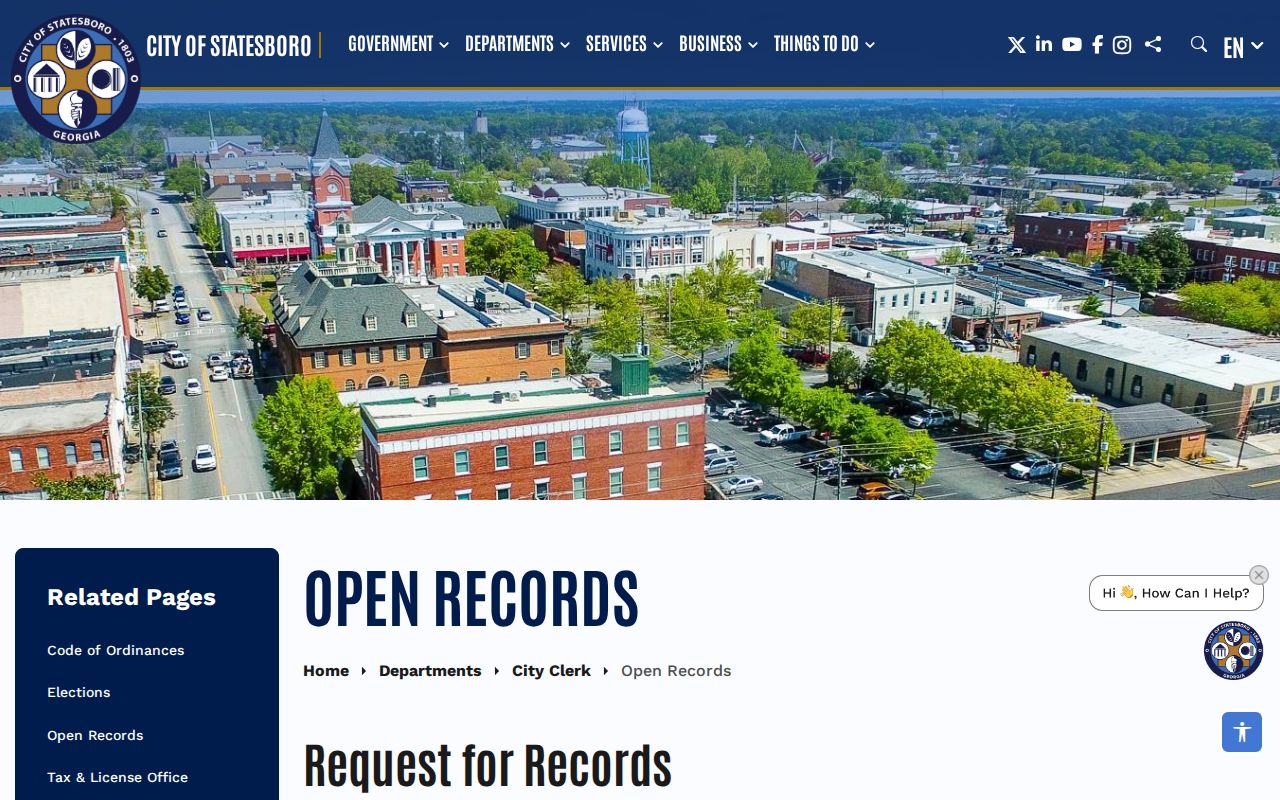
Ask for a specific record and you will usually get a useful reply. A request for an existing permit or license register gives staff something clear to pull, unlike a vague question about who lives at a particular address in Statesboro.
Request tip. Georgia allows search, redaction, and production labor charges after the first 15 minutes, so a tight date range can reduce cost.
Route Statesboro Vital Records Correctly
Where a vital event happened decides where the record lives. Birth and death certificates for a Bulloch event route through the county health department. Or they route through the Georgia Department of Public Health. Marriage licenses and copies belong with Bulloch Probate Court. The state holds marriage records for 1952 through 1996, though. Divorce decrees stay with Superior Court. A state verification for that limited span is not the decree. Current birth certificates are confidential, limited to eligible people under O.C.G.A. §31-10-25. The Georgia vital-record request guide lays out record types, eligibility, identification, fees, and ordering channels.
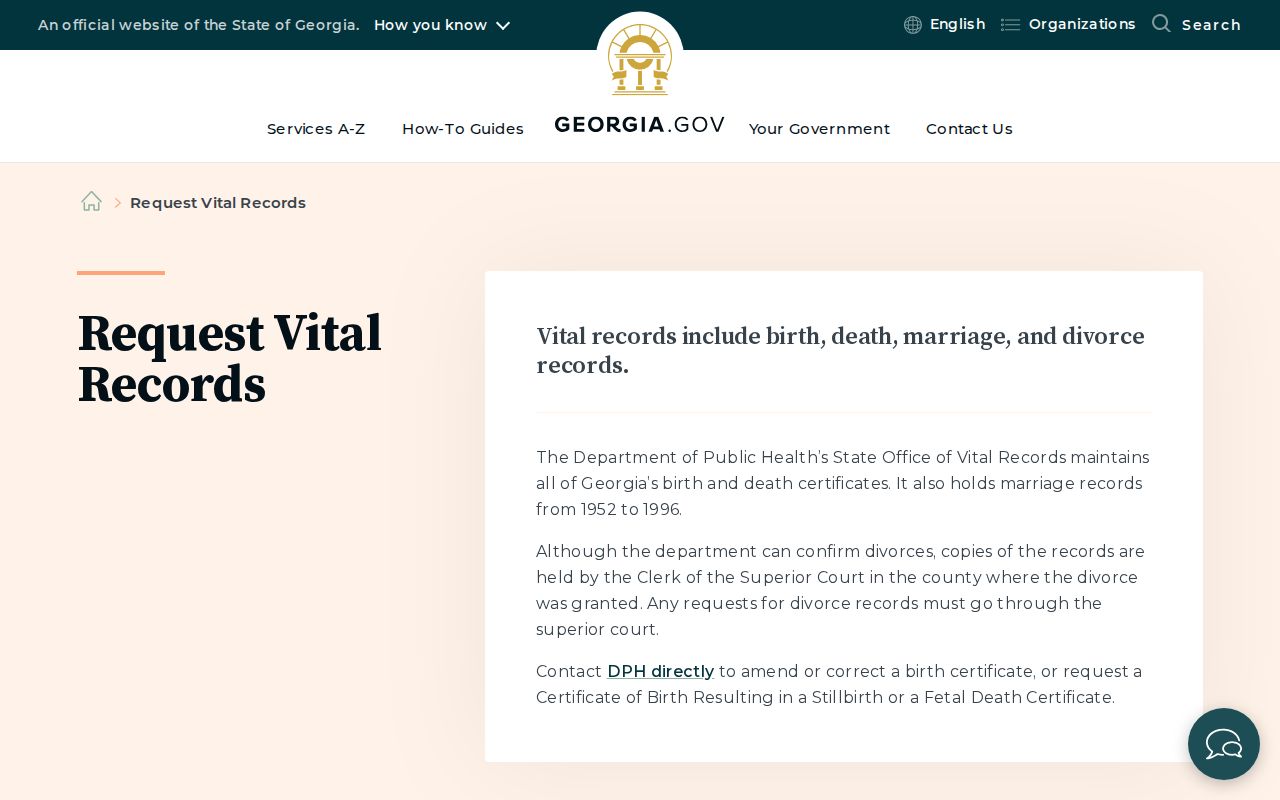
Follow the event-county and relationship rules shown there. For marriage or divorce material outside the state's stated coverage, ask the local court directly. Fees are simple enough. Under the 2026 guide, a first birth or death certificate costs $25. A state marriage record costs $10. Mail can take eight to ten weeks. An available walk-in record may be issued the same day. Historical access runs on a different clock. Birth records transfer after 100 years, and death, marriage-application, divorce, or annulment records after 75.
Browse Historical Statesboro Directories
Three R.L. Polk Statesboro city directories sit in the Digital Library of Georgia. They are dated 1959, 1962, and 1964. That is not a continuous 1940-to-2000 run, whatever the collection's broad label suggests. The 1959 edition opened Polk's Statesboro series. It covered Collegeboro plus rural routes served by the Statesboro post office. Entries can carry a lot. Depending on the edition, you may see a resident's name, spouse, occupation or employer, home address, phone, and an owner or renter notation. Work both the alphabetical list and the green Street and Avenue Guide. The street section flips the question, leading from house number to named occupant or business. It can rebuild a whole block and show crossing streets. Compare several editions before concluding anyone vanished. A missing entry may reflect a move, a late canvass, an unlisted phone, a dorm residence, rural-route wording, or a publication error. The full Statesboro city directory page covers abbreviations and year-to-year comparison.
| Collection | Verified span | Where kept | What it adds |
|---|---|---|---|
| R.L. Polk directories | 1959, 1962, 1964 | Digital Library of Georgia | Name and street views |
| Local newspaper microfilm | Back to 1899 | Statesboro-Bulloch County Library | Obituaries, marriages, transfers, community news |
| Public History Files | Mixed local eras | Library cabinet and digital collection | More than 1,000 topical files |
| Sanborn maps | 1908, 1913, 1922, 1930, 1946 | Library of Congress | Building and street context |
Search Statesboro's Deeper Archives
The Statesboro-Bulloch County Library at 124 S. Main Street anchors local history in Statesboro. Its genealogy holdings run to roughly 7,000 to 8,000 books, magazines, and bound periodicals. Oral histories, census rolls, marriage and land files, court and will records, and cemetery and family material round it out. County and church sources complete the set. A public-history cabinet sits in the hall left of the Genealogy office. Search the master folder list first. Surname, street, subdivision, school, church, or business name can each open a file. Do not assume nothing local survives.
Georgia Southern's Henderson Special Collections holds the other half of the trail. Bulloch Historical Society manuscripts and photographs live there. Ledgers, account books, organizational papers, newsletters, yearbooks, and alumni publications do too. Materials are staff-retrieved, so start with a catalog or finding aid and arrange an appointment. A World War I collection lists Bulloch veterans. Local DAR records span 1964 to 2021, with a known gap in the minutes. These collections can separate a public institutional role from a home address.
Eastside Cemetery adds one more unusually exact index. City engineering records tie a purchaser to a section, block, and lot. The purchaser may not be the person buried there, though. Pair that reference with an obituary or death source. The Bulloch Clerk page shows the courthouse side of Statesboro's archival trail.
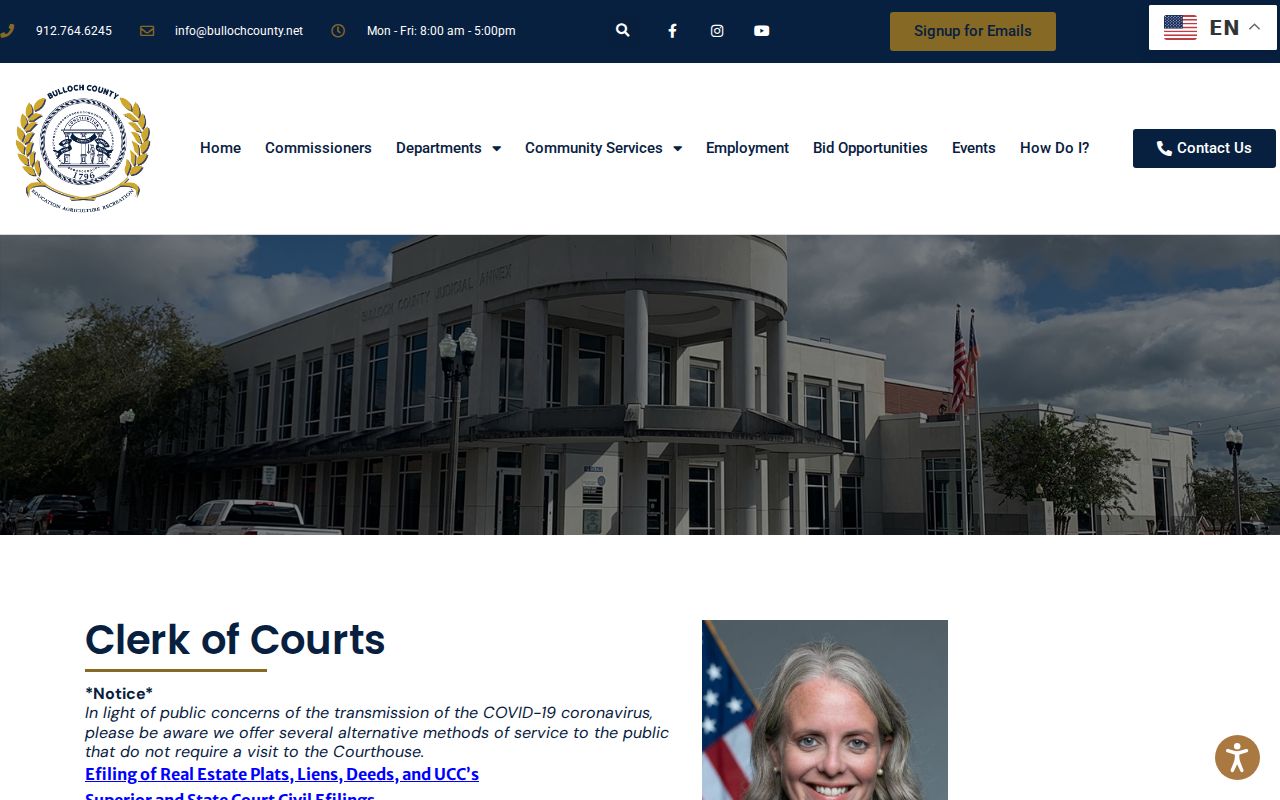
When a modern portal ends, records staff can point a search toward older material. Deed books, court files, and microfilm often wait behind the counter, and the staff know exactly where.
Respect Statesboro Record Boundaries
Open records do not open every private fact. Georgia law redacts Social Security numbers, bank and payment data, medical and insurance details, a mother's birth name, birth month and day, and protected addresses or phone numbers under O.C.G.A. §50-18-72. VoteSafe shields registered voters holding protective orders or living in family-violence shelters. The federal Driver's Privacy Protection Act restricts driver records. Utility accounts, delivery histories, and private association member rosters fall outside any public directory.
A parcel owner's name can stay public. A protected address in a personnel file stays hidden. Never stitch partial records together to rebuild a shielded address. If a public record is wrong, ask the maintaining agency to fix it. Commercial people-search sites run their own opt-outs and may lag or merge official sources.
Lawful use. Statesboro records may be used for legitimate personal research, but never to stalk, threaten, harass, or evade an address-protection program.